Joel Barker
Questions

Welcome to our dedicated subsite for Questions on herbal treatment . Here, we aim to provide you with accurate and reliable information on the use of herbs, day to day topics like treatment for children or pets. We understand that as a parent or pet owner, the health and safety of your beloved and pets are of the utmost importance, and that is why we have created this resource to provide you with the knowledge and resources you need to make informed decisions about their care. Please keep in mind that this site is not a substitute for professional treatment. It aims to help you to ask the right questions.
Animals
There are a number of common illnesses in animals for which herbal treatment may be helpful in providing relief or aiding in recovery. However, it is important to note that using herbs to treat animals should always be done under the guidance of a veterinarian, as animals have different physiology and metabolism than humans. Herbs can interact with other medications and have side effects, thus your veterinarian will have to evaluate if the treatment is safe and appropriate for your pet.
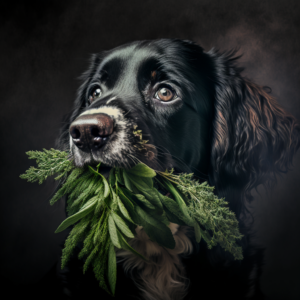
Digestive issues: For dogs, ginger, peppermint and fennel may be helpful in reducing symptoms of indigestion, gas, and diarrhea.
Skin conditions: For dogs and cats, calendula and aloe vera may be helpful in soothing skin irritations and promoting healing of wounds and hot spots.
Joint pain and inflammation: For dogs , turmeric and ginger may be helpful in reducing inflammation and pain in the joints.
Anxiety and stress: For dogs, chamomile and passionflower may be helpful in reducing anxiety and stress.
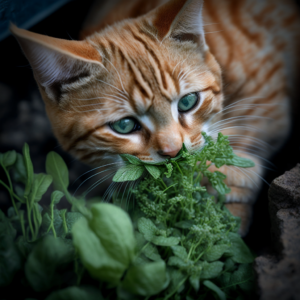
Digestive issues: For cats, slippery elm may be helpful for intestinal inflammation and diarrhea.
Skin conditions: For cats, calendula may be helpful in soothing skin irritations and promoting healing of wounds and hot spots.
Respiratory issues: For cats, thyme may be helpful in reducing symptoms of respiratory infections.
Anxiety and stress: For cats, chamomile and passionflower may be helpful in reducing anxiety and stress.
Lower urinary tract disease: For cats, cranberry extract may help reducing the formation of bladder stones and crystals, and may help to prevent urinary tract infections.

Respiratory issues: For horses, echinacea may be helpful in reducing symptoms of respiratory infections.
Laminitis: For horses, devil’s claw may help reducing pain and inflammation associated with laminitis.
Joint pain and inflammation: For horses, turmeric and ginger may be helpful in reducing inflammation and pain in the joints.
Gastric Ulcer: For horses, licorice root may help to protect the stomach lining and reduce the risk of gastric ulcers.
Skin conditions: For horses, calendula and Aloe vera may be helpful in soothing skin irritations and promoting healing of wounds and hot spots.